
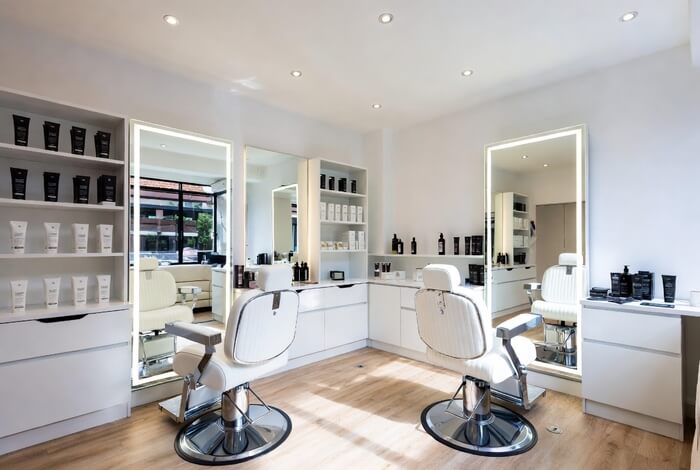
Average Energy Costs for Barbers in the UK :
Introduction
Energy bills are one of the biggest running costs for any barbershop in the UK. Prices have stayed high since the 2021–2022 energy crisis, and in 2026, commercial tariffs are still squeezing margins for small business owners.
What catches a lot of barbers off guard is that energy prices aren’t the same everywhere. Your location can push your unit rate 20–30% above or below the national average — and that adds up fast over a full year.
This guide covers average commercial energy costs by region, what’s driving the differences, and how to build a realistic energy budget for your barbershop. We’ve also included links to business electricity, commercial gas, water services, and smart meter options if you want to explore further.
Why Energy Costs Vary by Region
Three main factors drive regional price differences:
Network charges. Electricity travels through regional networks run by Distribution Network Operators (DNOs). Their infrastructure fees vary by area, and suppliers pass those costs on to you. Older or higher-maintenance networks tend to cost more.
Levies and policy costs. The Climate Change Levy (CCL), Contracts for Difference charges, and capacity market payments all feed into your unit rate. How these land on your bill can shift depending on your supplier and network region.
Market competition. Cities with dense commercial activity attract more suppliers competing for business customers, which can keep prices lower. Rural or smaller markets often have fewer options and higher rates as a result.
Energy Costs by Region (2026)
The figures below are based on 2026 commercial electricity tariff data. For reference:
- Small barbershop = 1–2 chairs, ~45 hours/week
- Medium barbershop = 3–5 chairs, ~55 hours/week
All prices are ex-VAT and approximate — your actual costs will depend on your supplier, contract type, and usage.
London
High infrastructure costs and dense demand put London at the top of the pricing table.
| Metric | Small | Medium |
| Avg. Unit Rate | 32–36p/kWh | 30–34p/kWh |
| Est. Monthly Usage | 400–600 kWh | 700–1,100 kWh |
| Est. Monthly Cost | £160–£216 | £240–£374 |
| Est. Annual Cost | £1,920–£2,592 | £2,880–£4,488 |
Manchester
The North West has a competitive supplier market, keeping rates more reasonable than the capital.
| Metric | Small | Medium |
| Avg. Unit Rate | 24–32p/kWh | 22–30p/kWh |
| Est. Monthly Usage | 380–560 kWh | 650–1,050 kWh |
| Est. Monthly Cost | £106–£179 | £176–£315 |
| Est. Annual Cost | £1,274–£2,150 | £2,113–£3,780 |
Birmingham
The West Midlands sits in the mid-range — moderate distribution costs and decent supplier competition.
| Metric | Small | Medium |
| Avg. Unit Rate | 28–33p/kWh | 27–31p/kWh |
| Est. Monthly Usage | 390–570 kWh | 660–1,060 kWh |
| Est. Monthly Cost | £109–£188 | £178–£328 |
| Est. Annual Cost | £1,310–£2,257 | £2,143–£3,942 |
Glasgow
Scotland generally has lower distribution network costs. Fixed-term contracts in Glasgow can be particularly competitive.
| Metric | Small | Medium |
| Avg. Unit Rate | 26–30p/kWh | 25–28p/kWh |
| Est. Monthly Usage | 370–550 kWh | 640–1,020 kWh |
| Est. Monthly Cost | £96–£165 | £160–£285 |
| Est. Annual Cost | £1,152–£1,980 | £1,920–£3,424 |
Leeds
Yorkshire has a relatively modern distribution network and strong commercial competition — one of the more affordable regions for business energy.
| Metric | Small | Medium |
| Avg. Unit Rate | 27–31p/kWh | 26–29p/kWh |
| Est. Monthly Usage | 380–560 kWh | 650–1,040 kWh |
| Est. Monthly Cost | £103–£174 | £169–£302 |
| Est. Annual Cost | £1,234–£2,082 | £2,028–£3,619 |
Quick Comparison
| City | Avg. Unit Rate | Annual Cost (Small) | Annual Cost (Medium) |
| London | 32–36p | £1,920–£2,592 | £2,880–£4,488 |
| Manchester | 24–32p | £1,274–£2,150 | £2,113–£3,780 |
| Birmingham | 28–33p | £1,310–£2,257 | £2,143–£3,942 |
| Glasgow | 26–30p | £1,152–£1,980 | £1,920–£3,424 |
| Leeds | 27–31p | £1,234–£2,082 | £2,028–£3,619 |
Approximate ex-VAT estimates based on 2026 commercial tariff data.
What Drives Your Barbershop’s Energy Bill
Your regional rate is the starting point — but how you run your shop is what really determines the final number.
Equipment load. Clippers, hot towel cabinets, steamers, lighting, water heaters, card machines — it all adds up. A five-chair shop running full days can use 2–3 times the energy of a single-chair setup.
Opening hours and timing. More days open means more consumption. If your busiest hours overlap with peak demand periods (typically weekday mornings and early evenings), Time of Use tariffs can hit harder.
Heating, lighting, and hot water. These three are the silent budget-killers. A 2kW electric heater running 8 hours daily costs around £4.80–£5.76 per day. Switching from halogen to LED can cut lighting energy by up to 80%. A poorly timed or uninsulated water heater runs constantly when it doesn’t need to.
Planning Your Energy Budget
The basic formula:
Monthly Cost = Daily kWh × Days Open × Unit Rate (p) ÷ 100
Example: A medium barbershop in Manchester using 35 kWh/day, open 26 days a month, on a 30p tariff = £273/month ex-VAT.
Multiply by 12 for an annual figure — but add 15–25% for winter months when heating and lighting load increases.
Practical tips:
- Use your actual past bills (12 months of kWh data) rather than estimates
- Note your contract end date and start shopping 3–6 months before it expires — many contracts auto-renew at higher rates
- Lock in a fixed-rate contract if you want price certainty through market swings
- Account for any changes coming up: a new chair, longer hours, or equipment upgrades all shift your baseline
- Check your smart meter options — real-time usage data makes budgeting much more accurate
FAQ
How much electricity does a barbershop use?
A small 1–2 chair barbershop typically uses 370–600 kWh per month. A larger 3–5 chair shop can use 640–1,100 kWh depending on equipment, opening hours, and heating. Actual usage varies significantly by location and how the shop is run.
Are fixed tariffs better for salons?
For most barbershops, yes — fixed-rate contracts give you predictable monthly costs and protect against price spikes. They’re especially valuable if you’re on a tight margin and need to budget accurately. Variable tariffs can occasionally be cheaper, but they carry more risk.
Can barbers save money with smart meters?
Yes, in several ways. A smart meter shows your real-time consumption, which helps identify wasteful habits — like equipment left on overnight or heating running unnecessarily. It also means accurate billing rather than estimated readings, which removes the risk of sudden catch-up bills. Utility7 offers free smart meter installation to business clients.
Conclusion
Energy costs for UK barbershops in 2026 range from around £1,150 to over £4,500 per year depending on location, size, and how the business is run. London is the most expensive market; Glasgow and Leeds sit at the more affordable end. Across every region, the biggest wins come from choosing the right tariff, locking it in before your contract expires, and tightening up on heating, lighting, and equipment use.
Don’t let your contract roll over without checking the market. There are better deals out there — and the switching process is simpler than most business owners expect.
Ready to Cut Your Barbershop’s Energy Bills?
Utility7 is one of the trusted business energy consultants in the UK, helping barbershops, salons, and small businesses get competitive commercial tariffs from trusted suppliers — covering electricity, gas, water, and smart meters.
We handle the comparison, the paperwork, and the switch. You stay focused on your customers.
- Free, no-obligation energy comparison
- Competitive commercial tariffs from trusted suppliers
- Hassle-free switching — we manage the process end to end
- Free smart meter installation for business clients
- Dedicated support for small business owners
Our clients save up to 50% on their utility bills after switching.
Get a free no-obligation quote in under 60 seconds.
Call or WhatsApp: 07913 685 973