
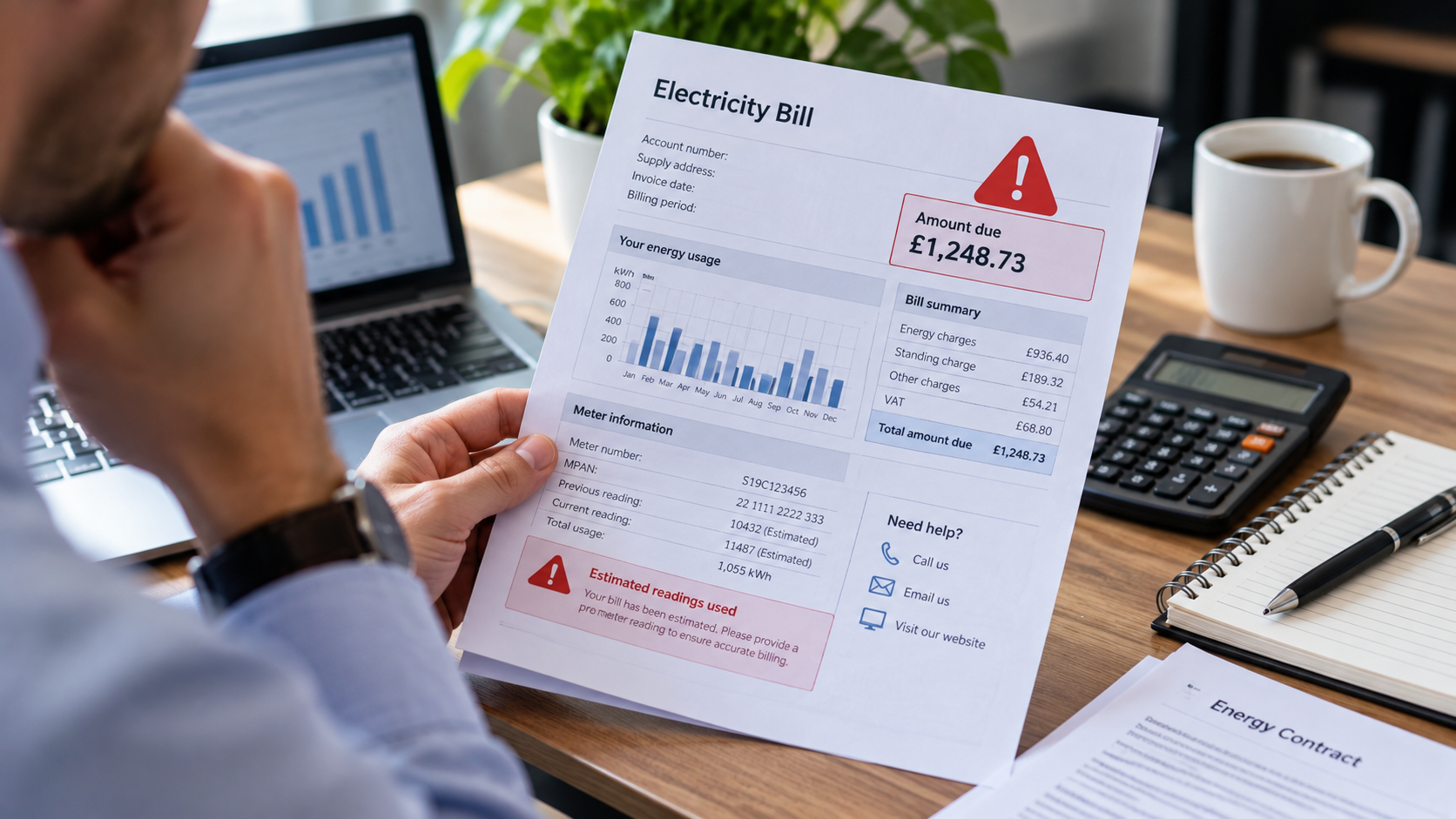
Business Energy Billing Errors can leave a UK company paying the wrong amount, carrying an unexplained balance or spending valuable time trying to work out why a bill does not match its contract or meter readings. The good news is that many billing problems can be checked methodically before they turn into a larger dispute.
For restaurants, takeaways, cafés, salons, shops, offices, warehouses and care businesses, a billing mistake can affect cash flow as well as confidence in a supplier. The problem may be as simple as an estimated reading, but it can also involve the wrong meter, incorrect contract rates, duplicated dates or charges linked to a previous occupier.
This guide explains nine practical checks you can use to identify Business Energy Billing Errors, collect the right evidence and ask your supplier for a clear correction. Reviewing Business Energy Billing Errors systematically can help you separate genuine usage changes from account or charging problems. It is not about refusing legitimate charges; it is about confirming that the bill accurately reflects your supply, usage and agreed terms.
What Are Business Energy Billing Errors?
Business Energy Billing Errors are differences between what a business should reasonably be charged and what appears on an electricity or gas invoice. They may result from inaccurate account information, incorrect meter data, estimated consumption, contract mismatches or administrative problems.
A high bill is not automatically an incorrect bill. Your usage may have genuinely increased because of longer opening hours, refrigeration, heating, machinery or seasonal demand. The key is to compare the invoice against evidence rather than judging it only by the total amount due.
Common Business Energy Billing Errors to Look For
Some Business Energy Billing Errors are obvious, while others only become clear when you compare the bill with your meter, signed contract or previous invoices. Common examples include:
- Estimated readings that are significantly different from the actual meter reading.
- The wrong meter serial number, MPAN or MPRN attached to the account.
- Unit rates or standing charges that do not match the agreed contract.
- Billing dates that overlap or leave unexplained gaps.
- Charges relating to a previous or subsequent occupier.
- Payments, credits or refunds missing from the account.
- Unexpected VAT or Climate Change Levy treatment that needs checking.
- A catch-up bill following a long period of inaccurate or estimated billing.
Important: Do not assume every unexpected charge is an error. Check the contract, meter readings, billing period and account history first. Keeping the undisputed part of an account up to date can also help prevent a billing query from becoming a wider payment problem.
9 Smart Checks for Business Energy Billing Errors
1. Confirm the Supply Address and Account Holder
Start with the basics. Make sure the invoice shows the correct trading address, legal entity and period during which your business was responsible for the premises. This is especially important after a move, lease change or change of tenancy.
2. Match the Meter Serial Number
Compare the meter serial number printed on the physical meter with the number shown on your bill. If they do not match, photograph the meter clearly and contact the supplier. A meter mismatch can create serious confusion over whose consumption is being billed.
3. Check Whether Readings Are Actual or Estimated
Look at the opening and closing readings and check whether they are marked as actual, estimated or customer-provided. If an estimate appears unrealistic, take a dated meter reading or photograph. Repeated estimates can later result in a large correction when an accurate reading is obtained.
4. Compare Unit Rates With Your Contract
Find your signed contract, renewal confirmation or supplier welcome document. Compare the electricity or gas unit rate on that paperwork with the rate charged on the invoice. Remember that some contracts can contain more than one rate or other agreed charging components.
5. Verify the Standing Charge
Check the daily standing charge against your agreement and multiply it by the number of days in the billing period. A small daily difference can become more noticeable across a full contract term, so it is worth checking separately from the unit rate.
6. Check Billing Dates for Overlaps or Gaps
Place two or three consecutive bills side by side. The end date of one billing period should make sense against the start of the next. If the same dates or consumption appear twice, ask the supplier to explain the calculation and provide a corrected statement if necessary.
7. Review Payments, Credits and Adjustments
Compare the supplier statement with your bank records. Confirm that Direct Debit payments, card payments, refunds and account credits have been posted correctly. Some Business Energy Billing Errors are account allocation problems rather than mistakes in the energy calculation itself.
8. Check VAT and Other Applicable Charges
Review the VAT line and any Climate Change Levy shown on the bill. Tax treatment depends on the circumstances of the supply, so do not simply copy the treatment from another business. If you believe the tax treatment is incorrect, ask the supplier what information or declaration it requires to review the account.
9. Build an Evidence Pack Before Contacting the Supplier
Keep the relevant bills, contract, meter photographs, readings, payment records and previous correspondence together. Explain the exact line you are challenging and what outcome you want, such as a revised bill, account correction or written explanation. This makes Business Energy Billing Errors easier for both sides to investigate.
The table below summarises common Business Energy Billing Errors and the evidence that can help you check them quickly.
Business Energy Billing Errors: Quick Comparison Table
| Possible Issue | What to Compare | Useful Evidence |
|---|---|---|
| Estimated usage | Bill reading vs physical meter | Dated meter photo |
| Wrong contract rate | Invoice vs signed agreement | Contract or renewal confirmation |
| Wrong meter | Serial number and supply details | Meter photo and previous bill |
| Missing payment | Supplier statement vs bank record | Bank statement or receipt |
| Previous occupier charge | Liability dates | Lease, completion date or handover evidence |
What About Back-Billing and Older Charges?
A supplier may issue a back bill when energy used previously was not accurately charged. Ofgem states that back-billing rules can limit charges for energy used more than 12 months earlier for domestic customers and microbusinesses when the relevant conditions are met. The protection may not apply where the customer has acted unreasonably, for example by preventing accurate billing.
If an old charge appears suddenly, do not assume it is either valid or invalid. Check your business status, the dates involved and your billing history against the current Ofgem back-billing guidance.
When Should You Escalate a Billing Problem?
If Business Energy Billing Errors remain unresolved after normal account enquiries, raise a formal written complaint and keep the complaint reference. State the disputed amount, why you believe it is wrong, what evidence you have and what correction you are requesting.
Eligible microbusinesses and small businesses have access to energy redress arrangements in qualifying disputes. The GOV.UK guidance on energy dispute redress for small businesses explains the eligibility framework.
For a practical complaint process, you can also read Utility7’s business energy complaints guide. It explains how to organise evidence and communicate the issue clearly.
Not Sure Whether Your Business Energy Bill Looks Right?
Utility7 can help you review the key information on your latest business electricity or gas bill, including meter details, usage, contract rates, standing charges and billing dates. If something looks unusual, you will have a clearer starting point before contacting the supplier.
Frequently Asked Questions
How Do I Know if My Business Energy Bill Is Wrong?
Compare the supply address, meter serial number, meter readings, billing dates, unit rates, standing charge and payments against your meter, contract and account records. A difference does not always prove an error, but it gives you something specific to investigate.
What Should I Do First if I Find Business Energy Billing Errors?
Collect evidence before contacting the supplier. Keep the disputed bill, meter photographs, readings, contract documents and payment records together, then explain exactly which charge or account detail you believe needs correcting.
Can a Supplier Correct an Estimated Business Energy Bill?
Yes, a supplier can review billing when more accurate meter information becomes available. The resulting correction may reduce or increase the account balance depending on the actual consumption compared with the previous estimate.
Should I Ignore a Bill While It Is Disputed?
No. Contact the supplier promptly, explain what you dispute and ask how it wants the account handled during the investigation. Where possible, keep undisputed current charges up to date rather than simply ignoring the whole account.
Last reviewed: September 2026. This article provides general information for UK businesses and is not legal, tax or financial advice. Supplier terms and individual circumstances vary.
“`