
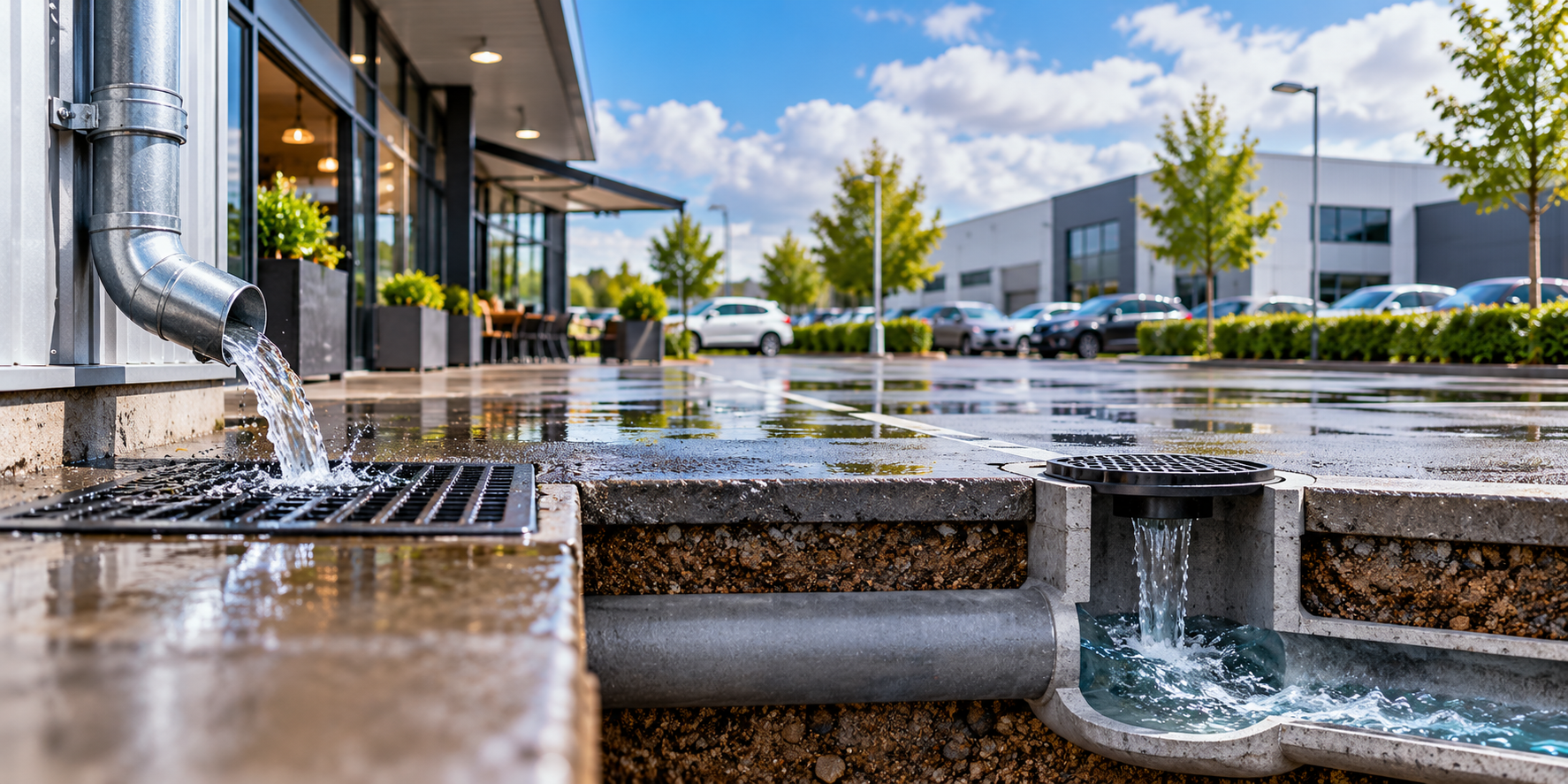
Business water drainage charges can represent an overlooked part of a UK company’s water and sewerage bill, particularly where the premises include roofs, car parks, paved areas or extensive outdoor space. Understanding what these charges cover can help business owners check whether they are being billed correctly.
Restaurants, takeaways, cafés, salons, offices, warehouses and other commercial premises may pay for different drainage services. However, the charging method depends on the location, sewerage provider and individual property arrangements.
This practical guide explains seven checks that can help you understand your drainage costs, identify possible inaccuracies and investigate reductions where your property qualifies.
Quick answer: Business water drainage charges generally cover services associated with removing rainwater from commercial premises, removing foul wastewater and, where applicable, highway drainage. If surface water from your property does not enter a public sewer, you may qualify for a surface water drainage rebate. Eligibility depends on your provider’s charging rules and evidence of the property’s drainage arrangements.
What Are Business Water Drainage Charges?
Commercial water bills can include charges beyond the clean water used inside your premises. Drainage services help manage wastewater and rainwater entering public sewerage infrastructure.
For example, a warehouse with a large roof and extensive paved parking might create substantial rainwater runoff. A small shop could have a different drainage arrangement and charging assessment.
According to Ofwat’s guidance on non-household surface water drainage, charges can be incorporated into standing charges or calculated using property characteristics such as rateable value or site area.
Importantly, not every property has identical drainage arrangements. Reviewing the details is more useful than assuming that every drainage charge is incorrect.
Types of Commercial Drainage Charges
Surface Water Drainage
Surface water drainage concerns rainwater from roofs, hardstanding and other areas that enters public sewerage infrastructure, directly or indirectly.
Where rainwater is managed entirely through suitable alternative drainage arrangements, a business may be eligible for reduced charges.
Foul Sewerage
Foul sewerage covers wastewater from activities such as washing, food preparation, toilets and cleaning. These charges often reflect water consumption, although the precise calculation varies.
Highway Drainage
Highway drainage covers rainwater runoff from public roads and footpaths. This is distinct from surface water drainage associated with an individual business property.
Highway drainage charges may remain payable even when a property qualifies for a surface water drainage rebate.
Business Water Drainage Charges: 7 Smart Checks
1. Examine Your Latest Water Bill
Start by reviewing your latest commercial water and sewerage invoice. Identify separate drainage entries and any charges included within a wider standing or sewerage charge.
- Check the billing address and supply reference.
- Identify surface water and highway drainage entries.
- Review the charging period and assessment method.
- Compare charges with previous invoices.
2. Establish Where Rainwater Goes
Find out whether rainwater from your property enters a public sewer, drains into a soakaway, or is managed through another system.
Ask your landlord, property manager or drainage contractor if you do not have accurate drainage plans. Remember that rainwater may reach public sewers indirectly through shared drainage systems.
3. Check the Property’s Chargeable Area
Where site-area charging applies, the water company may use an estimated property area to determine the relevant charging band.
Check whether boundaries, landscaped areas or land that drains naturally have been properly considered. An inaccurate assessment could affect the amount payable.
4. Identify Possible Rebate Eligibility
If no surface water from your premises reaches a public sewer, you may qualify for a surface water drainage rebate. Eligibility is not automatic simply because a property has a soakaway.
The relevant provider may require evidence covering the entire property rather than only one section of the site.
5. Review Shared Premises Arrangements
Businesses occupying shopping centres, industrial estates or multi-unit commercial buildings may share drainage facilities with other occupiers.
Check your lease and service charge arrangements to establish responsibility for each cost. Ask for clarification if drainage charges appear both on utility invoices and landlord statements.
6. Request a Formal Charging Review
Where you suspect an incorrect drainage assessment, contact your water retailer or relevant sewerage company. Explain the concern and request confirmation of the applicable charging methodology.
Keep correspondence, supporting documents and reference numbers. Ask whether an adjustment can apply to previous billing periods, where appropriate.
7. Review Your Wider Business Water Costs
Drainage is only one part of a commercial water bill. It is also worth checking water consumption, wastewater calculations, standing charges and retail service costs.
Business Drainage Charges Comparison
The following comparison explains the main categories that may appear on a commercial water and sewerage bill.
| Charge Type | What It Covers | What to Check |
|---|---|---|
| Surface water | Rainwater entering public sewers | Drainage connection and rebate eligibility |
| Foul sewerage | Collection and treatment of wastewater | Usage estimates and return-to-sewer assumptions |
| Highway drainage | Runoff from public roads and footpaths | Applicable provider charging scheme |
| Site-area assessment | A method of calculating surface water charges | Property area, drainage and charging band |
Note: Charges may be combined rather than itemised separately. The applicable charging approach varies by provider and jurisdiction.
How to Request a Drainage Rebate
Businesses questioning their surface water charges should follow a documented process rather than withholding payment without agreement.
- Gather documents: Collect recent invoices, site plans and available drainage information.
- Confirm the provider: Identify the retailer and the sewerage company responsible for your property.
- Check eligibility: Request the relevant rebate conditions and evidence requirements.
- Submit the application: Supply evidence and request written confirmation of the assessment.
- Review the decision: Check future invoices and request an explanation of any previous-period adjustments.
Ofwat provides additional information about reducing surface water drainage charges, including non-connection rebates and site-area assessments.
Important: A rebate is not guaranteed. Any reduction or refund depends on the applicable charging scheme, the actual drainage arrangements and the provider’s assessment. Rules and processes can differ across England, Scotland and Wales.
Common Mistakes When Reviewing Drainage Bills
Several misunderstandings can make a drainage review unnecessarily complicated. The most common include:
- Assuming every business qualifies: Rebate eligibility depends on actual drainage connections and charging rules.
- Confusing drainage categories: Surface water, foul sewerage and highway drainage are different services.
- Ignoring property boundaries: An incorrect site assessment can affect area-based charges.
- Expecting an automatic refund: Providers may require a formal application supported by suitable evidence.
- Comparing bills without context: Charging structures, site characteristics and billing periods can vary considerably.
Taking time to verify these details can improve the quality of any discussion with your water provider.
Make a More Informed Decision About Your Business Water Costs
If you would like to review your current commercial water arrangements, Utility7 offers a no-obligation comparison service. Share your requirements with our team and explore the available options for your business.
Free initial comparison. No obligation to switch. Available options depend on your business and premises.
Frequently Asked Questions
1. What are business water drainage charges?
They are charges associated with drainage and sewerage services for commercial premises. Depending on the property and provider, bills may include surface water drainage, foul sewerage and highway drainage costs.
2. Can a business claim a surface water drainage rebate?
Potentially. Where no surface water from the property enters a public sewer, the business may qualify for a rebate. Supporting evidence and approval under the applicable charging rules are usually required.
3. Does switching water retailers remove drainage charges?
Not automatically. Switching an eligible commercial water account generally changes the retailer rather than the physical sewerage network. Relevant wholesale drainage charges may continue to apply.
4. Who should I contact about incorrect drainage charges?
Start with the water retailer shown on your invoice. They should explain the billing process or direct you to the relevant sewerage company. If the issue remains unresolved, follow the provider’s complaints procedure.
Information note: This article provides general guidance for UK commercial customers. Water market arrangements, charging methods and rebate eligibility vary by location and provider. Confirm the current rules with your retailer or sewerage company before making financial or contractual decisions.