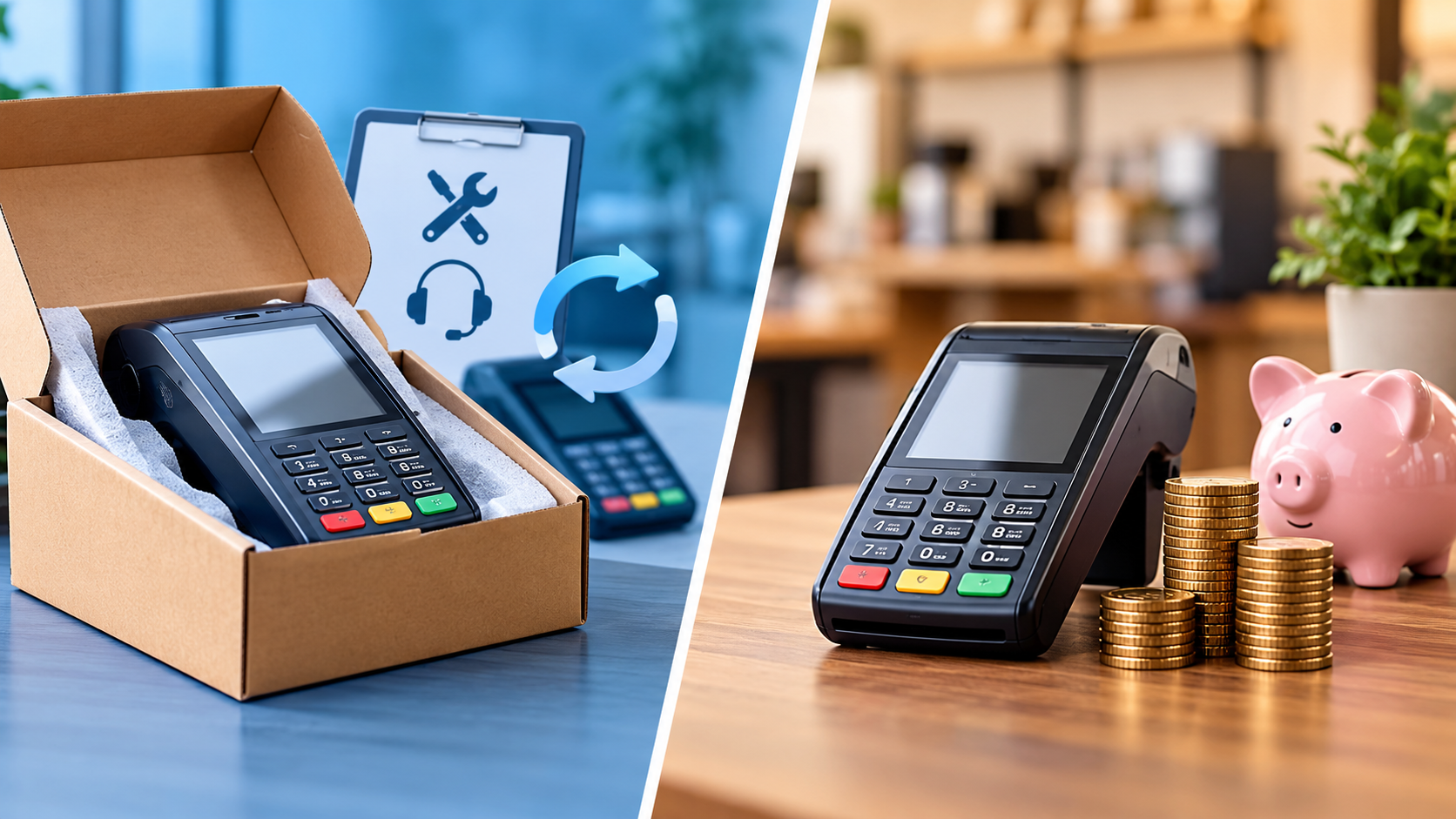
Card machine rental vs buying is an important financial decision for UK businesses accepting debit cards, credit cards and contactless payments. Whether you operate a restaurant, takeaway, café, salon, retail shop or another commercial business, your choice can affect monthly expenses, transaction fees and long-term payment costs.
Renting generally involves recurring payments for a terminal, while purchasing requires an upfront investment. However, the machine’s price is only one part of the overall cost of accepting card payments.
This guide compares seven important cost factors, explains when each option may be suitable and shows how UK business owners can evaluate card machine offers before committing to a provider.
Quick answer: Buying a card machine can suit businesses wanting lower fixed hardware costs and greater ownership flexibility. Renting may be suitable for businesses seeking bundled technical support, replacement equipment or an integrated payment service. The better choice depends on transaction volume, processing fees, contract conditions and total ownership costs.
Card Machine Rental vs Buying: What’s the Difference?
A rented card machine is typically supplied through a payment provider or equipment leasing arrangement. The business pays a recurring rental fee, sometimes with support, maintenance or replacement services included.
A purchased card machine is owned by the business after payment. Many purchased devices still require the provider’s payment processing service, software and compatible merchant account arrangements.
Buying hardware does not automatically mean the terminal can be used with any payment provider. Compatibility, security configuration and software restrictions can limit your options.
7 Smart Card Machine Cost Comparisons
1. Upfront Equipment Costs
One of the clearest differences between card machine rental vs buying is the initial payment.
Purchasing generally requires paying for the card reader before using it. The amount depends on the terminal’s functionality, connectivity, manufacturer and provider.
Renting may involve little or no upfront hardware payment, although setup charges and other fees can apply. This can help a new business preserve working capital.
2. Monthly Rental and Service Charges
Rental agreements normally involve a regular hardware charge, regardless of how many customers pay by card.
Purchased machines may avoid recurring rental fees, but payment processing subscriptions, connectivity costs, software subscriptions and other service charges may still apply.
Businesses should calculate the cost over the intended operating period rather than comparing only the first month’s payment.
3. Card Transaction Processing Fees
Transaction fees can have a greater financial impact than the card machine itself, particularly for businesses processing large volumes of card payments.
Providers may charge percentage-based processing fees, fixed transaction charges or a combination of both. Pricing can vary by card type, payment channel and commercial agreement.
The UK’s Payment Systems Regulator explains how card scheme and processing fees contribute to merchant payment costs.
For a clearer understanding, read Utility7’s card machine guides.
4. Contract Length and Cancellation Fees
Some rental arrangements involve fixed commitments. Businesses may face early termination fees if they cancel before the agreed date.
The Payment Systems Regulator has introduced an 18-month initial contract limit for terminal-hire agreements covered by its relevant direction. This does not mean every payment processing or equipment agreement is automatically limited to 18 months. (approximately)
5. Maintenance, Repairs and Replacement
A malfunctioning card machine can interrupt payments during busy trading periods. Technical support therefore deserves careful consideration.
Some rental packages include replacement terminals, software support or maintenance. Others charge separately for particular services.
Purchased equipment normally comes with specified warranty terms. Repairs or replacement outside those terms may become the business owner’s responsibility.
6. Technology, Security and Compatibility
Modern payment terminals can support contactless payments, mobile connectivity and integration with electronic point-of-sale systems.
Rental arrangements may offer equipment replacement or upgrades under specified terms. Purchased hardware may remain usable for several years, provided it remains supported and compliant with applicable security requirements.
Always confirm software support, PCI DSS responsibilities, connectivity and compatibility with your existing till or EPOS system before choosing a machine.
7. Total Long-Term Payment Costs
The final comparison should consider the total cost of using a card machine over 12, 18 or 24 months, rather than one advertised fee.
Add equipment charges, transaction fees, service subscriptions, applicable compliance fees and any expected additional costs.
This approach is particularly useful when comparing a rental package with lower processing rates against a purchased reader with no monthly hardware charge.
Card Machine Rental vs Buying: Comparison Table
The following table highlights common differences. Actual arrangements depend on the provider, equipment and contract.
| Cost Factor | Renting | Buying |
|---|---|---|
| Upfront payment | Often lower | Equipment purchase required |
| Monthly hardware fee | Usually recurring | Usually none |
| Transaction charges | Depend on agreement | Depend on provider |
| Ownership | Usually provider or lessor | Business owns device |
| Maintenance | May be included | Subject to warranty |
| Contract flexibility | Check rental commitment | Check processing terms |
| Replacement | May be covered | May involve extra cost |
Which Card Machine Option Suits Your Business?
Restaurants, Takeaways and Cafés
Hospitality businesses often need reliable terminals, quick payments and convenient support. Rental packages may be attractive where they include replacement equipment or integrated till systems.
Salons, Barbers and Small Shops
Businesses with relatively modest or irregular transaction volumes may prefer purchased card readers without regular hardware rental charges. Transaction fees and service subscriptions still need checking.
Retailers and Higher-Volume Businesses
Businesses processing substantial card turnover should pay particular attention to transaction rates, fixed per-payment charges and merchant account fees.
A small difference in processing fees can outweigh equipment costs over time. Compare complete quotations using your actual sales figures.
5 Things to Check Before Signing a Card Machine Contract
Before accepting any offer, request a written breakdown covering the following points:
- Total monthly costs: Include rental, subscriptions and merchant service charges.
- Transaction pricing: Check consumer, commercial and international card fees where relevant.
- Contract terms: Understand cancellation rights, renewal conditions and notice periods.
- Equipment support: Confirm warranties, repairs, replacement arrangements and technical assistance.
- Additional charges: Ask about compliance, authorisation, settlement and other applicable fees.
Compare Card Machine Options with Utility7
The best decision in a card machine rental vs buying comparison depends on your monthly turnover, average transaction size, business requirements and the complete provider agreement.
Utility7 helps UK businesses review card machine options and compare available payment solutions. You can explore the Utility7 card machine comparison service to understand potential choices before making a decision.
Looking for a Suitable Card Machine Deal?
Whether you need your first card machine or want to review an existing contract, Utility7 can help you compare available options based on your business needs. Request a free, no-obligation comparison and explore your choices with confidence.
Available rates and suitability depend on your business circumstances and provider approval.
Frequently Asked Questions
1. Is it cheaper to rent or buy a card machine in the UK?
Neither option is always cheaper. Buying may reduce ongoing hardware costs, while renting may provide a competitive overall package with processing fees and equipment support. Compare total costs across the same period.
2. Can I buy a card machine without paying monthly fees?
Some purchased card readers operate without monthly hardware rental or subscription charges. However, transaction fees normally apply, and additional charges depend on the provider’s pricing model.
3. Can I change providers if I own my card machine?
Owning a terminal does not guarantee compatibility with another provider. Some machines use proprietary software, security configurations or processing connections. Confirm compatibility before switching.
4. What is the best card machine for a small UK business?
The right machine depends on how and where you accept payments, your monthly turnover, average sale value and required features. A small mobile business may prioritise portability, while a busy restaurant may need reliable integrated terminals and technical support.
Final Thoughts
A careful card machine rental vs buying comparison should focus on overall value rather than the cheapest advertised equipment. Processing rates, contract flexibility, maintenance and additional fees can all affect the final cost.
Review your trading requirements, compare written quotations and choose a solution that supports your business today while remaining practical for future growth.