
Do UK Electricity Prices Rise in Winter?
For any business owner or homeowner in the UK, the arrival of October usually signals two things: colder weather and a nervous glance at the energy meter. It is a well-documented phenomenon that electricity prices in the United Kingdom tend to surge during the winter months.
But why does this happen every year, and what makes the winter of 2025–2026 particularly challenging? In this guide, we break down the complex factors behind the price hikes and offer expert advice on mitigating the impact.
1. The Supply and Demand Equilibrium
The most fundamental law of economics is supply and demand. During the UK winter, the demand for energy peaks.
-
Heating: Even though many homes use gas, a growing number of offices and modern flats rely on electric heating and heat pumps.
-
Lighting: With as little as 7–8 hours of daylight in December, the national grid sees a massive spike in lighting requirements for both residential and commercial sectors. When everyone turns on their heaters and lights at the same moment (the “peak periods”), the cost of generating that immediate supply becomes significantly more expensive.
2. The “Gas-to-Electricity” Link
A common misconception is that if you use electricity, gas prices shouldn’t affect you. In reality, about 40% of the UK’s electricity is generated by burning natural gas. In winter, Europe’s demand for gas for heating is at its highest. If there are supply disruptions—whether due to geopolitical tensions in Eastern Europe or maintenance issues in North Sea pipelines—wholesale gas prices soar. Consequently, the price per kilowatt-hour (kWh) of electricity follows suit.
3. The Role of the Ofgem Price Cap
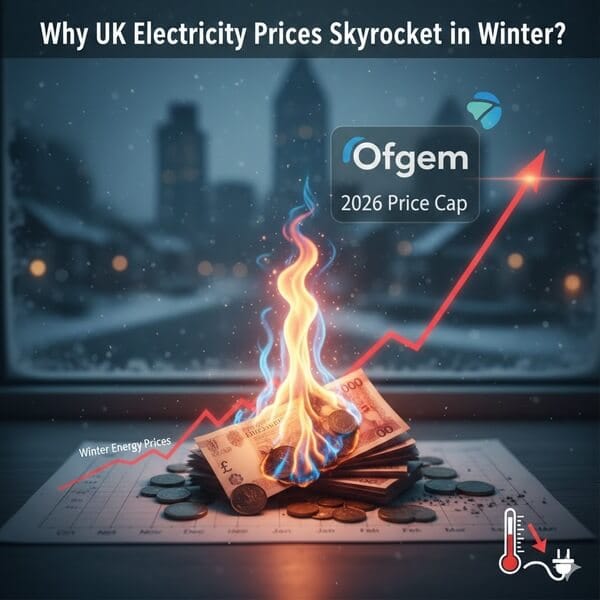
The energy regulator, Ofgem, updates the Energy Price Cap every three months. This cap limits what suppliers can charge per unit of energy on standard variable tariffs.
-
Recent Trends: For the January to March 2026 period, the cap has been adjusted to reflect the volatile wholesale market, settling at an average of £1,758 per year for a typical household.
-
For Businesses: It is important to note that the Price Cap does not apply to businesses. Business owners are more exposed to market fluctuations, making winter a high-risk period for those not on a fixed-rate contract.
4. Standing Charges: The Hidden Cost
Even if you reduce your consumption, you might notice your bill remains high. This is due to the Standing Charge—a fixed daily fee that covers the cost of maintaining the power cables, pipes, and the cost of failed suppliers. During winter, these operational costs often face upward pressure, adding another layer to the total bill.
5. The Reliability of Renewables in Winter
The UK is a world leader in wind energy. However, winter weather can be unpredictable.
-
Dunkelflaute: This is a German term used by meteorologists to describe “dark doldrums”—periods in winter with little wind and no sunlight. During these spells, wind turbines sit idle, and solar panels produce very little. The UK must then pivot to expensive “Peaker” plants (usually gas or coal) to keep the lights on, driving up the market price instantly.
Strategy: How to Safeguard Your Business
Knowing why prices rise is only half the battle. Here is how you can fight back:
-
Audit Your Peak Usage: Many business electricity contracts include higher rates during “Red Zones” (typically 4 PM to 7 PM). Shifting heavy machinery use or laundry cycles outside these hours can save hundreds of pounds.
-
Review Your Contract 3 Months Early: Don’t wait for your contract to end in December. Start comparing rates in September through consultants like Utility7 to lock in a “Pre-Winter” rate.
-
Invest in Insulation: For restaurants and retail shops, heat loss through doors and windows is the biggest “invisible” expense. Simple draught proofing can reduce the load on your electric heaters by 15-20%.
Conclusion
While we cannot control the weather or global gas markets, we can control how we respond to them. The winter of 2026 continues to show that the UK energy market remains volatile. By staying informed and utilizing energy consultancy services, you can ensure that your business survives the winter chill without a financial frostbite.