
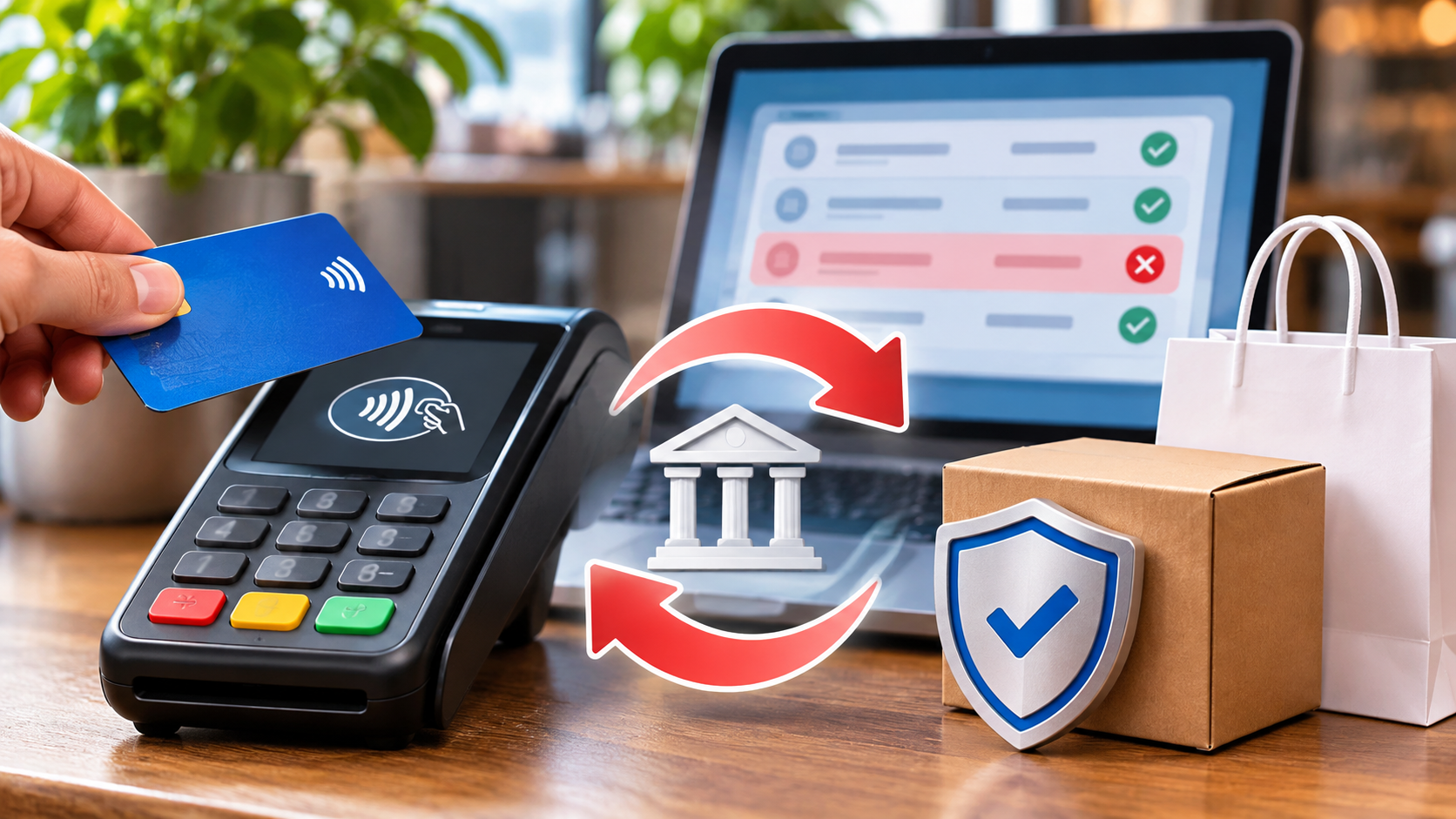
Card Payment Chargebacks can affect a UK business when a customer challenges a card transaction through their bank. The payment may be reversed, and the merchant can face an additional dispute fee depending on its agreement. For a restaurant, takeaway, salon, shop or online seller, a chargeback can turn a completed sale into a cash-flow problem.
Not every chargeback is fraudulent. Some follow genuine delivery problems, duplicate payments, incorrect amounts or disagreements about refunds. Understanding the reason for the claim is the first step towards responding fairly and effectively.
What Are Card Payment Chargebacks?
Card Payment Chargebacks are reversals requested through a card issuer under the relevant card scheme process. The cardholder contacts their bank, which assesses the dispute and may seek repayment from the merchant through its acquiring bank or payment processor. The business can usually submit evidence when the rules allow a defence.
Card Payment Chargebacks differ from ordinary refunds. With a refund, the merchant normally initiates repayment through its own payment system. With a chargeback, the cardholder asks their card provider to challenge the transaction. The outcome is governed by scheme rules, supporting evidence and relevant circumstances, not simply by which party complains first.
The GOV.UK guidance on disputed card payments outlines merchant exposure to chargebacks. Specific time limits vary by scheme and dispute reason, so follow the deadline in your provider’s actual notice rather than relying on a generic timetable.
Why Do Card Payment Chargebacks Happen?
Card Payment Chargebacks may arise when a customer says their order did not arrive, their service was cancelled without an agreed refund or the amount taken was incorrect. Banks also investigate alleged unauthorised payments and transactions that do not match the advertised description. A legitimate complaint should be dealt with promptly, even if a chargeback has begun.
- Goods or services not received: a delivery or appointment was missed.
- Not as described: the item or service differs materially from what was promised.
- Duplicate or incorrect payment: the customer sees an unexpected amount or repeat charge.
- Unauthorised use: the cardholder disputes having approved the transaction.
- Refund disagreement: the customer expected a refund that has not appeared.
An unfamiliar statement descriptor can also confuse customers. If the name appearing on their bank statement differs from your trading name, make it clear on receipts and at checkout.
Card Payment Chargebacks: Evidence by Dispute Type
Different claims need different records. The following comparison is a practical starting point; it does not guarantee the claim will be overturned. Ask your acquirer which documents and format the relevant card scheme requires.
| Dispute reason | Useful supporting records | Check before responding |
|---|---|---|
| Item not received | Delivery tracking, collection confirmation, customer messages | Does the record link to this order? |
| Service not provided | Booking record, attendance or completion evidence | Was the service actually supplied? |
| Duplicate payment | Terminal receipts, transaction references, refund record | Was one transaction already reversed? |
| Not as described | Listing, agreed specification, correspondence, photographs | Does the evidence address the complaint? |
| Unauthorised transaction | Transaction data and available authentication details | What evidence does the scheme permit? |
7 Smart Steps to Handle Card Payment Chargebacks
1. Read the chargeback notice immediately
Check the transaction date, dispute reason, amount, reference and response deadline. Your merchant acquirer may use a portal or email for evidence. Missing the deadline can mean losing the opportunity to contest the claim, even if you have a valid explanation. Assign responsibility to one employee and keep a record of when the notice arrived.
2. Match the claim to the original sale
Find the receipt, order number, payment method, till record and customer communication. For Card Payment Chargebacks involving online sales, check checkout and delivery records. For face-to-face payments, review the terminal entry and any permitted authentication information. Never assume that a matching amount alone identifies the correct transaction.
3. Decide whether to accept or challenge it
Some Card Payment Chargebacks are valid. If a promised service was not supplied or the customer is entitled to repayment, consider accepting the claim rather than disputing facts you cannot support. Where your records contradict the allegation, ask the provider how to submit a defence. Do not issue a separate refund without checking how to avoid paying twice.
4. Assemble relevant evidence, not a document dump
A concise response should explain the timeline: what was ordered, when payment was authorised, what was delivered and how you tried to resolve any complaint. Include only documents that address the stated dispute reason. Screenshots should be legible, dated where possible and consistent with the transaction details.
5. Respond through the authorised provider channel
Upload the response through your acquirer’s approved portal or follow its written instructions. Ask whether the case has entered a further review or pre-arbitration stage, and whether extra fees may apply. Keep the submission confirmation and a complete copy of everything sent, including filenames and timestamps.
6. Resolve customer problems before they escalate
Card Payment Chargebacks may be avoidable when customers can reach a helpful person quickly. Make refund terms visible, acknowledge complaints promptly and give realistic delivery or service updates. A clear process is especially valuable for cancellations, takeaway orders, salon deposits and recurring payments. Do not promise that a friendly response will prevent every bank dispute.
7. Review repeat patterns and provider terms
Record each case by reason, sales channel, outcome and operational cause. Look for repeated delivery failures, confusing trading names or duplicate terminal submissions. If chargeback costs are recurring, compare the provider’s dispute charges, tools, response support and fraud controls alongside its normal processing fees. Improvements should be based on your actual transaction history.
Important: Evidence does not guarantee a successful challenge. Card scheme rules, transaction authentication, the dispute category and the quality of records all influence the outcome.
Where Different UK Businesses Face Dispute Risks
Card Payment Chargebacks do not look identical across every industry. A busy café may need to investigate a duplicate terminal payment, while a takeaway may face an allegation that an online order never arrived. A salon could receive a disagreement over a booking deposit or cancelled appointment.
Retailers benefit from clear returns information and collection records. Trades and service providers should keep quotations, accepted work scopes and completion confirmations. For any business taking remote payments, a transparent checkout, appropriate authentication and reliable customer support can reduce avoidable disputes without eliminating risk entirely.
What to Ask When Comparing Card Payment Providers
Choosing a payment terminal is not just about transaction percentages. Ask about the complete cost and management process for Card Payment Chargebacks before signing a merchant agreement. Different providers may charge different dispute fees, provide different evidence tools or apply additional conditions to higher-risk businesses.
- Is there a fee for receiving or contesting a chargeback, even if I win?
- Where will dispute notifications appear and how much response time will I get?
- What evidence formats and customer authentication tools are supported?
- Can the provider help identify duplicate charges and issue timely refunds?
- Are there additional reserves, payout restrictions or termination conditions linked to disputes?
You can review available business card machine options at Utility7 and read our separate explanation of card machine transaction fees. Neither a lower processing rate nor a new terminal guarantees fewer chargebacks, but comparing the full agreement can prevent avoidable surprises.
Compare Card Machines With Utility7
If Card Payment Chargebacks have made you review your current payment arrangement, the next step is to understand your merchant costs, support options and contract terms. Utility7 helps UK businesses compare card machine solutions according to how they actually take payments.
Find a Payment Setup That Fits Your Business
Tell us whether you need a countertop, portable or mobile card machine, and which contract features matter most. We can help you explore relevant options without promising a particular fee, dispute outcome or level of savings.
Frequently Asked Questions
1. Can a customer charge back a card payment after buying in person?
Yes, some disputes can arise after a card-present sale. The available grounds and liability depend on the payment method, authentication, relevant card scheme rules and facts of the transaction. A terminal authorisation is useful evidence, but does not defeat every possible claim.
2. How long do merchants have to respond to a chargeback?
There is no single response deadline for all merchants and dispute types. Your acquirer’s notice should state the applicable date, which may be much shorter than the period in which a cardholder can raise a claim. Act as soon as you receive it.
3. Do businesses always pay a chargeback fee?
No universal fee applies. Charges depend on your payment processor or merchant agreement, and may differ according to the stage and outcome. Check the full fee schedule, including any dispute administration or escalation charges.
4. Can changing a card machine stop chargebacks completely?
No. Card Payment Chargebacks are part of card payment disputes and cannot be eliminated through equipment alone. A suitable provider, secure transaction practices, accurate records and responsive customer service may help a business manage its exposure.